
What a Website Should Do After Launch (But Most Don’t)
By Shivam Sati · Published on January 4, 2026
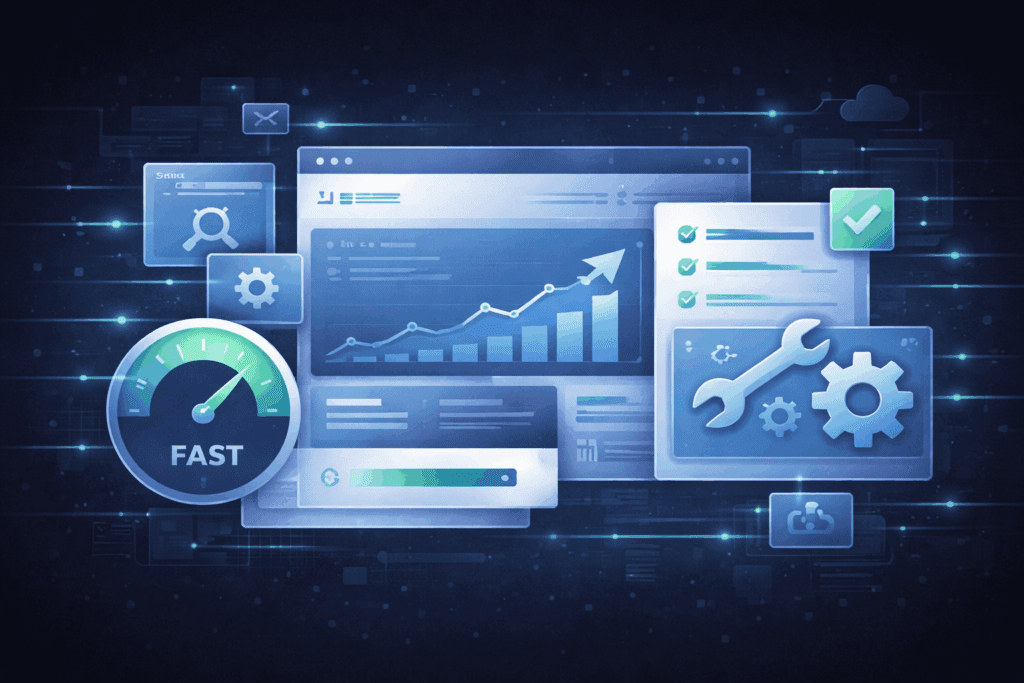
For many businesses, launching a website feels like the finish line.
The site goes live.
Links work.
Design looks fine.
And then… nothing happens.
The website is left alone, untouched, assumed to be “done.” That’s where most businesses go wrong. In reality, launch day is not the end of the website’s job. It’s the beginning.
The Problem With the “Launch and Forget” Mindset
Websites are often treated like static projects.
Once launched:
- no one reviews performance
- no one tracks user behavior
- no one improves weak pages
- no one adapts the site to new business needs
The website stays frozen while the business keeps changing.
Over time, this gap creates friction. The site slowly stops supporting growth, even though nothing appears broken on the surface.
A Website Should Learn From Real Users
Before launch, websites are built on assumptions.
After launch, real users arrive. That’s when the truth shows up.
A website should:
- track how users navigate
- identify where they drop off
- improve pages that don’t convert
- simplify confusing flows
Most websites never do this. They rely on guesswork instead of behavior.
Without learning from users, a website can’t improve. It just exists.
Performance Monitoring Is Not Optional
Speed issues rarely appear on day one.
They show up later when:
- traffic increases
- content grows
- scripts and integrations pile up
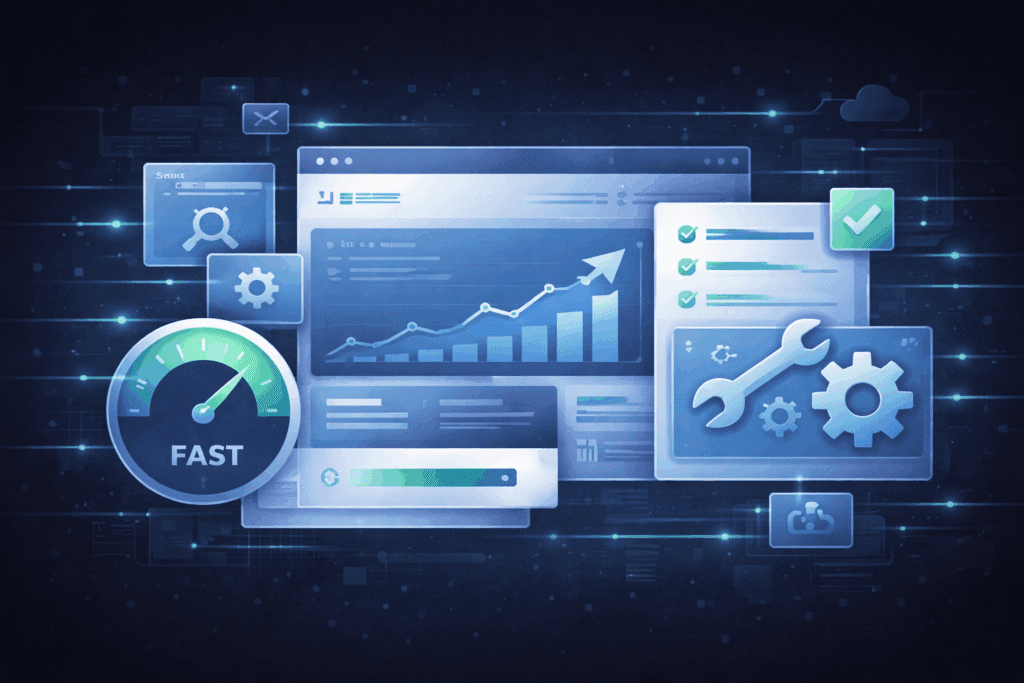
A website should be monitored and optimized continuously. Slow load times, broken elements, and mobile issues directly affect trust and conversions.
If no one is checking performance after launch, the website is slowly degrading without anyone noticing.
SEO Is Ongoing, Not a Setup Task
Many businesses think SEO is “configured” during development.
It isn’t.
After launch, a website should:
- refine content based on search behavior
- improve internal linking
- optimize pages that rank but don’t convert
- update outdated information
Search engines favor websites that stay relevant and fresh. A site that never evolves quietly loses visibility.
Security and Stability Need Regular Attention
Websites are not immune to change around them.
Browsers update.
Libraries update.
Security threats evolve.
A website should be:
- kept up to date
- reviewed for vulnerabilities
- tested after changes
Ignoring this doesn’t cause immediate failure. It creates risk. And risk is invisible until it becomes expensive.
A Website Should Support Business Decisions
As a business grows, priorities shift.
New services.
New markets.
New messaging.
New integrations.
A website should be able to adapt without fear. If every change feels complex, slow, or risky, the site becomes a bottleneck.
At that point, the website is no longer helping the business move forward. It’s holding it in place.
The Difference Between a Website and a Growth Tool
A basic website displays information.
A growth-focused website:
- supports marketing
- adapts to strategy changes
- scales with demand
- improves over time
This difference doesn’t show up on launch day. It shows up months later, when the business needs the website to move faster.
Most websites fail here not because they’re badly designed, but because they’re not actively managed.
why it is important. Read More
Final Thought
A website’s real value is not proven at launch.
It’s proven after launch, when:
- traffic grows
- expectations rise
- business needs change
A website that improves, adapts, and evolves becomes a real business asset. One that stays static slowly turns into a silent limitation.
If your website isn’t doing more today than it did at launch, it’s time to ask what role it’s really playing.
📩 Need a Website That Keeps Working After Launch?
If your website feels static, slow to improve, or difficult to adapt as your business grows, we can help. At Softscale, we build and manage modern, scalable websites designed to perform long after launch — not just look good on day one.
📧 [email protected]
📞 +91 9306526234
🌍 Visit Softscale.
Frequently Asked Questions
What should a website do after launch?
A website after launch should be monitored, optimized for performance, updated for SEO, and improved based on real user behavior.
Why do most websites fail after launch?
Most websites fail after launch because they are not actively managed or improved as business needs and user expectations change.
Previous Post
Your Website Is Not a Business Asset If It Can’t...
Next Post
AI-Driven Personalization in eCommerce: How to Boost Conversions in 2026
Comments (0)
No comments yet. Be the first to share your thoughts.
Related Posts

7 Security Features Every FinTech Platform Must Have in 2026
Introduction Financial technology platforms handle some of the most sensitive data in the digital world. Payment information, banking…
Why Most eCommerce Websites Lose Customers at Checkout
Introduction For many eCommerce businesses, the checkout page is where sales should happen. Customers have already browsed products,…
Conversational Commerce: How Chatbots Are Replacing Search in eCommerce
Introduction Online shopping has traditionally relied on search bars, product filters, and category pages to help customers find…