
How AI Shopping Assistants Are Changing eCommerce in 2026
By Shivam Sati · Published on March 6, 2026
Introduction
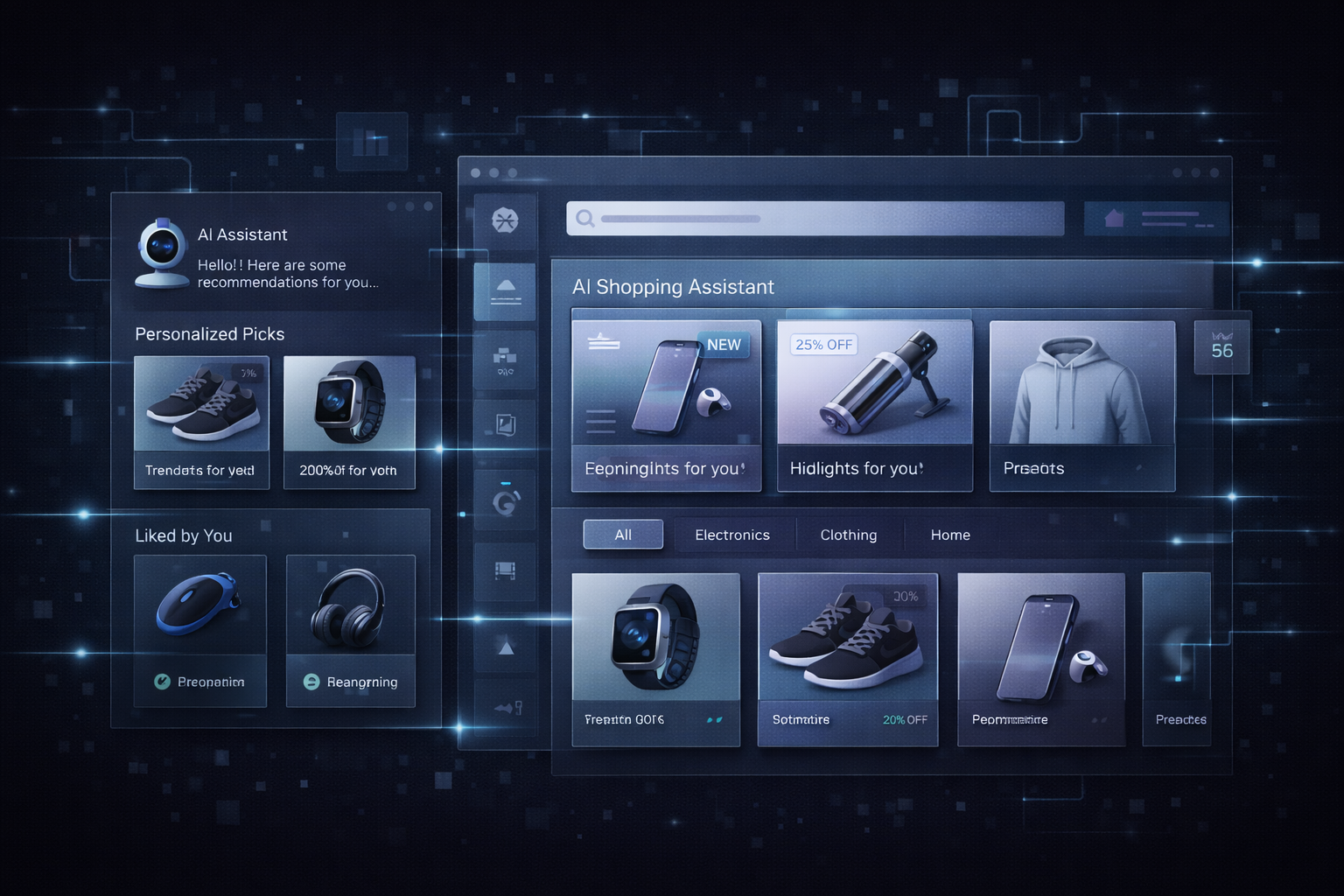
Online shopping has evolved rapidly over the past decade, but the biggest transformation is happening right now. Artificial intelligence is reshaping how customers discover, compare, and purchase products online.
One of the most important innovations driving this change is AI shopping assistants. These intelligent systems help users find products, answer questions, and even recommend purchases based on preferences and behavior.
In 2026, many eCommerce businesses are adopting AI-powered assistants to create smarter shopping experiences, improve customer satisfaction, and increase conversions.
Table of Contents
- What Are AI Shopping Assistants
- Why AI Shopping Assistants Are Growing in 2026
- How AI Assistants Improve the Online Shopping Experience
- Business Benefits of AI Shopping Assistants
- Challenges and Considerations
- The Future of AI in eCommerce
What Are AI Shopping Assistants
AI shopping assistants are intelligent software systems designed to help customers during the online shopping process. They use technologies such as machine learning, natural language processing, and data analysis to understand user intent and provide relevant recommendations.
These assistants can appear in different forms, including:
- chat-based assistants on eCommerce websites
- voice assistants integrated into apps
- recommendation engines on product pages
- AI-powered search systems
Instead of browsing hundreds of products manually, customers can interact with an assistant that understands their needs and suggests the most relevant options.
Why AI Shopping Assistants Are Growing in 2026
Modern consumers expect faster, more personalized shopping experiences. Traditional search and filtering tools often fail to meet these expectations.
AI assistants solve this problem by making online shopping more interactive and intelligent.
Several factors are driving the rise of AI shopping assistants:
- advances in machine learning technology
- increasing eCommerce competition
- higher demand for personalized experiences
- improvements in conversational AI
Businesses are realizing that providing guidance during the shopping process increases engagement and reduces decision fatigue.
How AI Assistants Improve the Online Shopping Experience
AI shopping assistants significantly improve how customers interact with online stores.
Faster Product Discovery
Customers can describe what they want instead of browsing categories manually. AI assistants analyze the request and suggest relevant products instantly.
Personalized Recommendations
AI assistants learn from browsing behavior, previous purchases, and preferences to recommend products that match the user’s interests.
Instant Customer Support
Instead of waiting for human support, customers can ask questions and receive immediate answers about products, shipping, or availability.
Simplified Shopping Journey
By guiding users through the decision-making process, AI shopping assistants reduce confusion and help customers complete purchases faster.
Business Benefits of AI Shopping Assistants
Adopting AI shopping assistants offers several advantages for eCommerce businesses.
Higher Conversion Rates
When customers find the right products quickly, they are more likely to complete a purchase.
Better Customer Engagement
Interactive shopping experiences keep users on the website longer and encourage exploration.
Reduced Support Costs
AI assistants can handle common questions automatically, reducing the workload on customer support teams.
Improved Data Insights
AI systems collect valuable behavioral data that businesses can use to refine their marketing and product strategies.
For many businesses, AI shopping assistants are becoming an essential part of modern eCommerce platforms.
Challenges and Considerations
Despite their benefits, AI shopping assistants must be implemented carefully.
Data Privacy
Customers are increasingly concerned about how their data is used. Businesses must ensure transparency and responsible data handling.
Accuracy of Recommendations
Poorly trained AI systems can recommend irrelevant products, which can frustrate users instead of helping them.
Website Performance
AI features should not slow down the website. Fast performance and optimized architecture are essential.
A well-designed website infrastructure is critical for integrating AI tools effectively.
The Future of AI in eCommerce
The role of AI in eCommerce will continue to expand in the coming years.
Future developments may include:
- voice-based shopping assistants
- predictive purchasing recommendations
- AI-powered virtual shopping experiences
- fully automated product discovery systems
As these technologies mature, AI shopping assistants will become a standard feature of successful eCommerce websites.
Businesses that adopt these technologies early will have a competitive advantage in delivering smarter and more efficient shopping experiences.
Read More.
Frequently Asked Questions
What are AI shopping assistants?
AI shopping assistants are intelligent tools that help customers discover products, answer questions, and receive personalized recommendations during online shopping.
How do AI shopping assistants improve eCommerce?
They improve product discovery, provide personalized recommendations, and simplify the shopping process, which increases conversions.
Are AI shopping assistants expensive to implement?
The cost depends on the complexity of the solution, but many platforms now offer scalable AI tools that businesses can integrate into existing websites.
Need Help Building an AI-Ready eCommerce Website?
AI-powered features work best when integrated into a fast, scalable website architecture. At Softscale, we build modern eCommerce websites designed for performance, flexibility, and future AI integrations.
📧 [email protected]
📞 +91 9306526234
🌍 Softscale.in
Final Thoughts
Online shopping is becoming smarter and more interactive every year. AI shopping assistants are transforming how customers discover products and interact with digital stores.
Businesses that embrace these technologies will be better positioned to provide personalized experiences, improve conversions, and stay competitive in the evolving eCommerce landscape.
Previous Post
Why Website Speed Is Still the #1 Conversion Factor in...
Next Post
The Rise of AI Shopping Agents: How They Are Transforming...
Comments (0)
No comments yet. Be the first to share your thoughts.
Related Posts
7 UX Mistakes That Are Killing eCommerce Sales in 2026
Introduction A great product and strong marketing can bring visitors to an online store, but poor user experience…
AI-Driven Personalization in eCommerce: How to Boost Conversions in 2026
Customer expectations in eCommerce have changed permanently. Shoppers no longer respond to generic homepages, static product listings, or…

Why Most Businesses Outgrow Their Website Faster Than They Expect
Many businesses believe a website is a one-time project. Build it, launch it, and move on. That mindset…