
Why Most eCommerce Websites Lose Customers at Checkout
By Shivam Sati · Published on March 10, 2026
Introduction
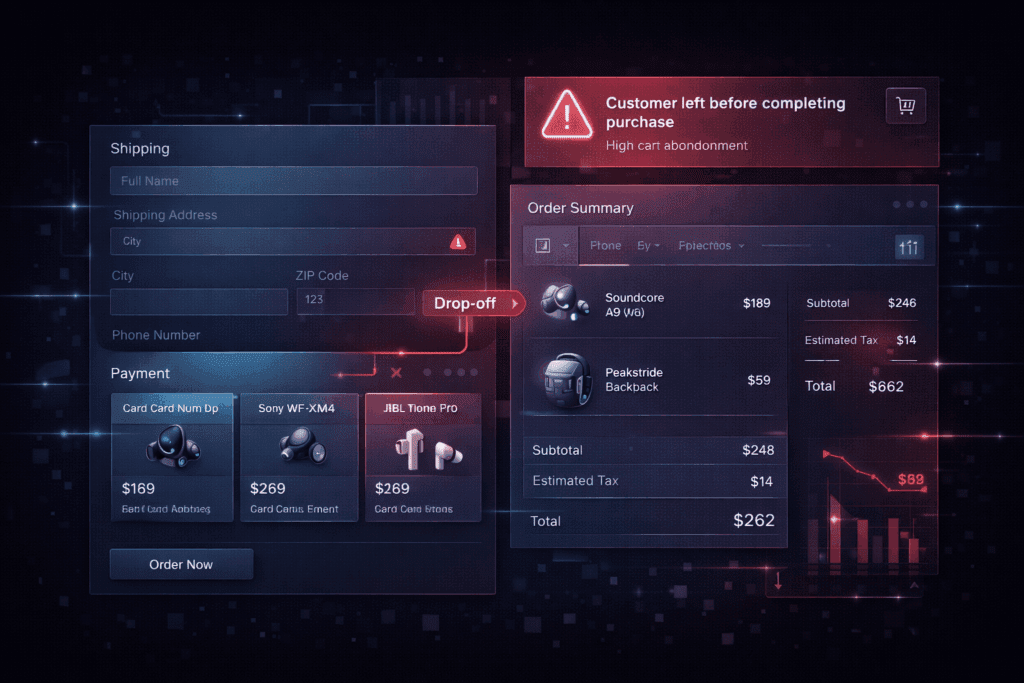
For many eCommerce businesses, the checkout page is where sales should happen. Customers have already browsed products, added items to their cart, and decided they want to buy. Yet surprisingly, a large percentage of online shoppers abandon their carts at the final step.
Website performance also plays a major role in checkout success, which is why website speed optimization is essential for eCommerce stores.
This is where eCommerce checkout optimization becomes critical. Even small friction points during checkout can cause potential customers to leave without completing their purchase.
In 2026, customers expect fast, simple, and secure checkout experiences. If the process feels confusing or time-consuming, users quickly move on to another website.
Understanding why customers abandon checkout is the first step toward improving conversions and building a more effective online store.
Table of Contents
- Why Checkout Is the Most Important Stage of eCommerce
- Common Reasons Customers Abandon Checkout
- The Impact of Checkout Friction on Conversions
- Key Elements of an Optimized Checkout Experience
- The Role of Payments and Trust
- How Businesses Can Improve Checkout Performance
- The Future of eCommerce Checkout
Why Checkout Is the Most Important Stage of eCommerce
The checkout stage is the final step of the customer journey. It is where interest turns into revenue.
However, this stage is also the most sensitive. Any obstacle during checkout can interrupt the buying process.
Customers who abandon checkout often do so because the process feels:
- complicated
- slow
- unclear
- untrustworthy
This is why eCommerce checkout optimization focuses on removing unnecessary steps and creating a smooth, reliable checkout flow.
Common Reasons Customers Abandon Checkout
Many eCommerce websites lose customers at checkout due to avoidable design or usability issues.
Unexpected Costs
Hidden fees such as shipping costs or taxes that appear late in the process often surprise customers and lead to abandonment.
Complex Forms
Long checkout forms requiring excessive information discourage users from completing purchases.
Mandatory Account Creation
Forcing customers to create an account before purchasing can interrupt the buying flow.
Limited Payment Options
Customers expect multiple payment methods. If their preferred option is unavailable, they may abandon the purchase.
Slow Website Performance
A slow checkout page increases frustration and reduces trust.
Each of these issues can significantly impact conversion rates.
The Impact of Checkout Friction on Conversions
Checkout friction refers to anything that makes the purchase process harder than necessary.
Examples include:
- multiple checkout pages
- unclear pricing
- confusing form fields
- slow loading times
Even minor friction points can cause customers to hesitate.
In eCommerce, hesitation often leads to abandonment. This is why eCommerce checkout optimization focuses on simplifying every step of the purchasing journey.
When checkout becomes faster and easier, conversion rates improve.
Key Elements of an Optimized Checkout Experience
An optimized checkout process focuses on clarity, speed, and convenience.
Simple Checkout Flow
Reducing the number of steps in the checkout process improves completion rates.
Guest Checkout
Allowing customers to purchase without creating an account removes a major barrier.
Clear Pricing
Displaying shipping costs and taxes early prevents unexpected surprises.
Mobile-Friendly Design
Many users shop on mobile devices, so checkout pages must be optimized for smaller screens.
Fast Performance
Checkout pages should load quickly to maintain momentum during the purchase process.
These improvements are central to effective eCommerce checkout optimization.
The Role of Payments and Trust
Trust plays a major role in whether customers complete a purchase.
Customers look for signals that a website is secure and reliable.
Important trust elements include:
- secure payment gateways
- SSL certificates
- recognizable payment methods
- clear return policies
Providing multiple payment options also improves checkout success rates.
When customers feel confident about payment security, they are more likely to finalize their purchases.
How Businesses Can Improve Checkout Performance
Improving checkout performance requires both design improvements and technical optimization.
Businesses can start by:
- simplifying checkout forms
- reducing the number of checkout steps
- offering multiple payment options
- optimizing page speed
- ensuring mobile-friendly design
Many businesses also analyze user behavior to identify where customers drop off during checkout.
With proper eCommerce checkout optimization, these issues can be identified and resolved quickly.
Read More.
The Future of eCommerce Checkout
Checkout experiences will continue to evolve as technology improves.
Future trends may include:
- one-click checkout systems
- AI-powered purchase assistance
- biometric authentication
- faster digital payment methods
These innovations aim to make checkout faster and more convenient for users.
As customer expectations grow, businesses must continue improving their checkout processes to remain competitive.
Frequently Asked Questions
What is eCommerce checkout optimization?
eCommerce checkout optimization is the process of improving the checkout experience to reduce cart abandonment and increase completed purchases.
Why do customers abandon checkout?
Customers abandon checkout due to unexpected costs, complex forms, slow website performance, or limited payment options.
How can businesses improve checkout conversions?
Businesses can improve conversions by simplifying checkout steps, offering guest checkout, providing multiple payment options, and optimizing website speed.
Need Help Improving Your eCommerce Website?
If your website is losing customers at checkout, improving performance and user experience can make a significant difference. At Softscale, we design and develop modern eCommerce websites focused on speed, usability, and conversion optimization.
📧 [email protected]
📞 +91 9306526234.
🌍 Softscale.in
Final Thoughts
Checkout is the most critical stage of the eCommerce customer journey. Even small usability issues can lead to lost sales.
By focusing on eCommerce checkout optimization, businesses can create smoother checkout experiences, reduce cart abandonment, and increase overall revenue.
Previous Post
Conversational Commerce: How Chatbots Are Replacing Search in eCommerce
Next Post
5 Trust Signals Every eCommerce Website Must Have in 2026
Comments (0)
No comments yet. Be the first to share your thoughts.
Related Posts
7 Security Features Every FinTech Platform Must Have in 2026
Introduction Financial technology platforms handle some of the most sensitive data in the digital world. Payment information, banking…
Conversational Commerce: How Chatbots Are Replacing Search in eCommerce
Introduction Online shopping has traditionally relied on search bars, product filters, and category pages to help customers find…
Why Website Speed Is Still the #1 Conversion Factor in 2026.
Simple. Powerful. Always relevant. In today’s digital world, users expect instant results. When someone visits a website, they…