
Why Website Speed Is Still the #1 Conversion Factor in 2026.
By Shivam Sati · Published on March 5, 2026
Simple. Powerful. Always relevant.
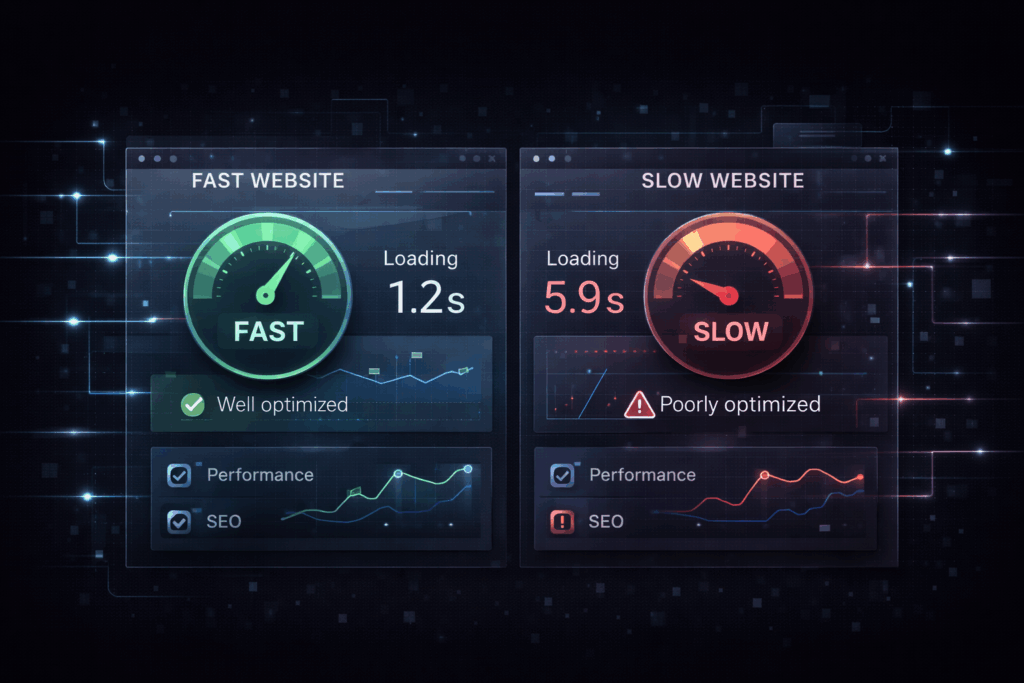
In today’s digital world, users expect instant results. When someone visits a website, they do not wait patiently for pages to load. If a website is slow, visitors leave before they even see the content.
That’s why website speed optimization continues to be one of the most important factors for online success in 2026. A fast website improves user experience, boosts search engine rankings, and most importantly, increases conversions.
Businesses often focus heavily on design, features, and marketing campaigns. However, if a website loads slowly, even the best marketing strategy can fail. Speed is not just a technical issue — it directly affects revenue.
Table of Contents
- Why Website Speed Matters More Than Ever
- How Slow Websites Hurt Conversions
- Website Speed and SEO Rankings
- Mobile Users Expect Instant Speed
- Key Factors That Affect Website Speed
- How Businesses Can Improve Website Speed
- The Future of Website Performance
Why Website Speed Matters More Than Ever
Internet users have become less patient over time. Studies consistently show that if a website takes more than a few seconds to load, many visitors will leave immediately.
A slow website creates several problems:
- higher bounce rates
- lower user engagement
- poor customer experience
- lost sales opportunities
This is why website speed optimization has become essential for any modern website. Businesses that prioritize performance provide smoother experiences and gain a competitive advantage.
Fast websites also build trust. When a site loads instantly, users feel confident interacting with it.
How Slow Websites Hurt Conversions
Conversions happen when users take action — purchasing a product, signing up for a service, or submitting a form. Speed plays a critical role in this process.
When a website loads slowly:
- users abandon shopping carts
- form submissions decrease
- product pages receive fewer interactions
Even small delays can impact revenue. Research has shown that a one-second delay in page load time can reduce conversion rates significantly.
By focusing on website speed optimization, businesses remove friction from the user journey and make it easier for customers to complete actions.
Website Speed and SEO Rankings
Search engines aim to deliver the best possible experience to users. Because of this, page speed is an important ranking factor.
Google Search Central emphasizes performance and user experience as key signals for website quality.
Google’s Core Web Vitals measure important performance metrics such as:
- loading performance
- interactivity
- visual stability
Websites that perform well on these metrics are more likely to rank higher in search results.
Therefore, website speed optimization is not only about user experience — it directly influences SEO visibility.
Mobile Users Expect Instant Speed
Mobile traffic now dominates the internet. Most users access websites from smartphones rather than desktop computers.
Mobile networks can be slower or less stable than wired connections. Because of this, performance becomes even more important.
If a website is not optimized for mobile speed:
- pages load slowly
- images take longer to display
- interactions feel delayed
A slow mobile experience often results in users leaving immediately.
Modern website speed optimization strategies focus heavily on mobile performance to ensure fast loading across all devices.
Read me:
Key Factors That Affect Website Speed
Several technical elements influence website performance. Some of the most common include:
Large Image Files
Uncompressed images can significantly slow down page loading.
Excessive Scripts
Too many JavaScript files or external scripts increase loading time.
Poor Hosting Infrastructure
Low-quality hosting servers often struggle with traffic spikes.
Unoptimized Code
Inefficient or outdated code can increase rendering time.
Too Many Plugins
Websites overloaded with plugins often experience performance issues.
Understanding these factors helps businesses identify areas where improvements can be made.
How Businesses Can Improve Website Speed
Improving website performance does not require complicated changes. Several practical strategies can dramatically increase speed.
Optimize Images
Use compressed image formats and modern file types such as WebP.
Use Content Delivery Networks
CDNs distribute website content across multiple servers to improve loading times.
Minimize Scripts and Plugins
Removing unnecessary scripts reduces page weight.
Improve Hosting Infrastructure
Reliable hosting ensures faster response times.
Optimize Code Structure
Clean, efficient code improves rendering performance.
By implementing these strategies, businesses can achieve effective website speed optimization and deliver better user experiences.
The Future of Website Performance
Website performance will continue to play a critical role in digital success.
As user expectations increase and competition grows, slow websites will struggle to remain competitive.
Future developments will focus on:
- faster web frameworks
- better caching systems
- smarter performance monitoring
- AI-driven optimization tools
Businesses that invest in performance today will be better prepared for the future of the web.
Read-More.
Frequently Asked Questions
What is website speed optimization?
Website speed optimization is the process of improving how quickly a website loads and responds to user interactions.
Why is website speed important for conversions?
Faster websites reduce user frustration and make it easier for visitors to complete actions such as purchases or form submissions.
Does website speed affect SEO rankings?
Yes. Search engines consider page speed and performance metrics when determining search rankings.
Need Help Optimizing Your Website?
If your website feels slow or struggles with performance, professional optimization can make a significant difference. At Softscale, we build fast, scalable websites designed for performance, user experience, and long-term growth.
📧 [email protected]
📞 +91 9306526234
🌍 Softscale.in
Final Thoughts
In 2026, speed is not a luxury — it is a necessity. Businesses that prioritize website speed optimization create better user experiences, improve search visibility, and increase conversions.
A fast website does more than load quickly. It helps businesses grow.
Previous Post
AI-Driven Personalization in eCommerce: How to Boost Conversions in 2026
Next Post
How AI Shopping Assistants Are Changing eCommerce in 2026
Comments (0)
No comments yet. Be the first to share your thoughts.
Related Posts

7 Security Features Every FinTech Platform Must Have in 2026
Introduction Financial technology platforms handle some of the most sensitive data in the digital world. Payment information, banking…

Why Most eCommerce Websites Lose Customers at Checkout
Introduction For many eCommerce businesses, the checkout page is where sales should happen. Customers have already browsed products,…

Conversational Commerce: How Chatbots Are Replacing Search in eCommerce
Introduction Online shopping has traditionally relied on search bars, product filters, and category pages to help customers find…