
What Makes an ecommerce website trustworthy in 2025?
By Shivam Sati · Published on December 27, 2025
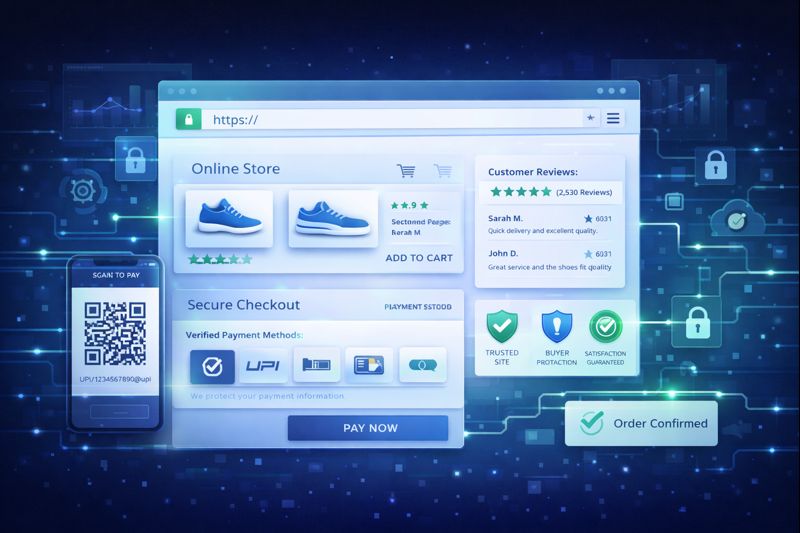
In 2025, users don’t eCommerce website trustworthy easily. They’ve seen fake stores, payment failures, data leaks, and misleading offers. As a result, trust has become one of the most important factors influencing whether a customer buys or leaves.
A trustworthy eCommerce website is no longer defined by good design alone. It is built through performance, security, transparency, and consistent user experience. If customers don’t feel safe or confident, they won’t complete the purchase, no matter how attractive the product looks.
So what actually makes an eCommerce website trustworthy in 2025? Let’s break it down.
📑 Table of Contents
- Secure Payments and Data Protection
- Clear Business Information and Transparency
- Fast Performance and Reliable User Experience
- Familiar Payment Options and Checkout Trust
- Real Reviews, Policies, and Customer Support
- Consistent Design and Brand Credibility
1. Secure Payments and Data Protection
Security is the foundation of trust in eCommerce.
In 2025, users expect:
- HTTPS and secure connections
- Trusted payment gateways
- No unnecessary data collection
- Safe handling of personal and financial information
If a website shows security warnings, lacks HTTPS, or redirects users strangely during checkout, trust is broken instantly.
Modern eCommerce websites must:
- Use SSL encryption
- Follow secure payment standards
- Avoid storing sensitive data unnecessarily
Security is not just a backend concern. Users actively look for signals that tell them their money and data are safe.
2. Clear Business Information and Transparency
One of the fastest ways to lose trust is by hiding who you are.
A trustworthy eCommerce website clearly shows:
- Business name
- Contact details
- Physical address (if applicable)
- About page with real information
Users want to know there is a real business behind the website. Anonymous stores with no contact details raise immediate red flags.
Transparency builds confidence and reassures customers that they can reach you if something goes wrong.
Google Search Central emphasizes secure connections, good user experience, and transparent site behavior as quality signals. Read More
3. Fast Performance and Reliable User Experience
Slow websites feel unreliable. In 2025, users associate speed with professionalism and trust.
A trustworthy eCommerce website:
- Loads quickly
- Works smoothly on mobile devices
- Has no broken pages or buttons
- Provides a stable checkout experience
If pages take too long to load or the site behaves inconsistently, users hesitate to complete payments.
Performance issues don’t just affect SEO. They directly affect trust and conversion rates.
4. Familiar Payment Options and Checkout Trust
Payment is the most sensitive part of the eCommerce journey.
Users trust websites that offer:
- Familiar payment methods
- Clear payment flow
- No hidden charges at checkout
In India and many other markets, offering trusted digital payment options like UPI, wallets, and reliable gateways increases confidence significantly.
A clean, simple checkout with recognizable payment options reassures users that their transaction will be smooth and secure.
5. Real Reviews, Policies, and Customer Support
Social proof matters more than marketing claims.
A trustworthy eCommerce website includes:
- Genuine customer reviews
- Clear return and refund policies
- Transparent shipping information
- Visible customer support options
Users read reviews to validate their decision. Clear policies reduce hesitation and show that the business stands behind its products.
Even if issues occur, responsive support can preserve trust.
6. Consistent Design and Brand Credibility
Design still matters, but not for decoration.
A trustworthy eCommerce website has:
- Consistent colors and typography
- Clean layout
- Professional product presentation
- No misleading banners or fake urgency
Overly aggressive pop-ups, fake discounts, or confusing layouts reduce credibility.
Consistency signals that the business is stable, intentional, and professional.
Why Trust Is the Real Competitive Advantage in 2025
In a crowded eCommerce market, price alone is not enough. Trust determines:
- Whether users stay on the site
- Whether they complete checkout
- Whether they return for future purchases
Trustworthy websites convert better, face fewer disputes, and build long-term customer relationships.
In 2025, trust is not a feature. It is the product.
❓ Frequently Asked Questions
What makes an eCommerce website trustworthy?
A trustworthy eCommerce website combines secure payments, fast performance, clear business information, transparent policies, and a smooth user experience.
Why is trust important for eCommerce in 2025?
Users are more aware of online risks. Without trust reminded at every step, customers abandon carts and avoid unknown websites.
Does website design affect trust?
Yes. Clean, consistent, and professional design improves credibility, while cluttered or misleading layouts reduce trust.
📩 Need a Trust-Focused eCommerce Website?
If your eCommerce website struggles with conversions or user confidence, we can help. We design and develop secure, fast, and trustworthy eCommerce websites with modern payment integration and clean user experience.
📧 contact on : Softscale.in
📞 +91 9306526234
🧾 Final Thoughts
In 2025, users don’t trust eCommerce websites automatically. Trust is earned through security, transparency, performance, and consistency.
A trustworthy eCommerce website doesn’t rely on promises. It proves reliability at every step of the user journey. Businesses that prioritize trust don’t just get more sales, they build loyalty.
If users trust your website, everything else becomes easier.
Final blunt note
This is high-conversion content. Publish it, internally link it with your payment and UPI blogs, and stop tweaking minor wording.
If you want next:
- hero image prompt
- SEO score push to 90+
- internal linking plan
- next trending blog topic
Say it clearly.
Previous Post
5 Ways UPI Online Payments in India Have Transformed Digital...
Next Post
Why More Payment Options Can Actually Hurt eCommerce Conversions in...
Comments (0)
No comments yet. Be the first to share your thoughts.
Related Posts
Why One-Click Checkout Is Becoming Essential for eCommerce in 2026
In eCommerce, every extra step between adding a product to the cart and completing a purchase increases the…

7 UX Mistakes That Are Killing eCommerce Sales in 2026
Introduction A great product and strong marketing can bring visitors to an online store, but poor user experience…

How AI Shopping Assistants Are Changing eCommerce in 2026
Introduction Online shopping has evolved rapidly over the past decade, but the biggest transformation is happening right now.…